Real Case Study: Migrating ASP.NET MVC to ASP.NET Core

Introduction: Why Adopt Clean Architecture in 2026?

Migrating from ASP.NET MVC to ASP.NET Core is a must for companies looking for high-performance, scalable, and cloud-compatible apps. In this blog, we explore several case studies of businesses migrating their systems, including use cases, advantages, challenges and lessons learned. Many leading .NET development companies and ASP.NET Core development companies are using this strategy to upgrade their enterprise applications.

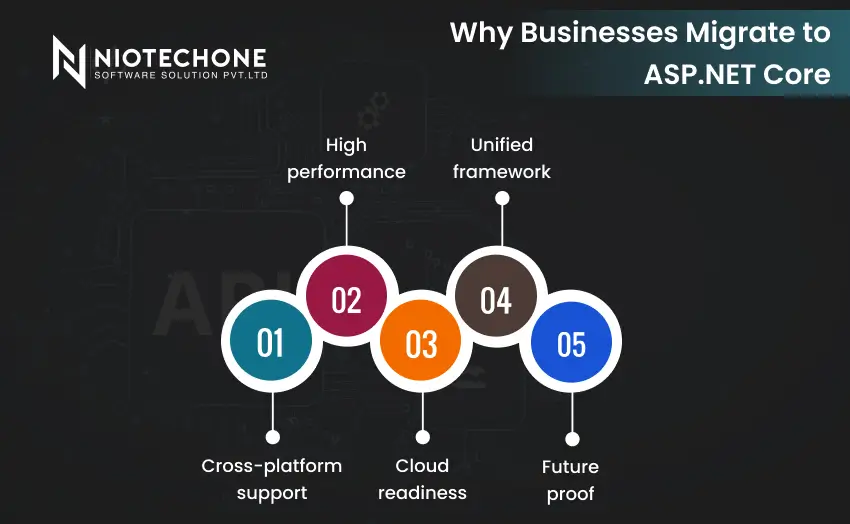
Why Businesses Migrate to ASP.NET Core

Businesses are switching from ASP.NET MVC to Core for its modern features, better performance, and long‑term support.

  • Cross-platform support – Works on Windows, Linux, and macOS.
  • High performance – Optimized for speed and scalability.
  • Cloud readiness – Perfect for microservices and containerized deployments.
  • Unified framework – Combines MVC, Web API, and Razor Pages.
  • Future-proof – Microsoft is investing in Core, while MVC is legacy.

Case Study-1: FinTech Loan Processing Application

Company Background  

A medium-sized FinTech firm provided online loan processing services to over 50,000 users. Their ASP.NET MVC app worked but was slow and couldn’t scale to meet the growing demand.

Challenges with ASP.NET MVC

  • Performance issues: Loan approvals took 5-7 seconds because of synchronous database calls.
  • Cloud limitations: Deployment in cloud environments was complex and costly.
  • Legacy security: Old authentication protocols were not compatible with new standards such as OAuth 2.1.
  • Expensive to maintain: Old libraries and dependencies added to technical debt.


Migration Goal  

The company wanted to move to ASP.NET Core 10 to enable quicker loan approvals, cloud deployment, new authentication, and cost savings.

Migration Approach  

Architecture review, new Core solution setup, migration to EF Core with async queries, consolidated controllers, Razor Pages with React, JWT authentication, and deployment on Azure Kubernetes Service (AKS).

Case Study-2: Healthcare IT Portal

Company Background  

A major healthcare organisation used an ASP.NET MVC portal to manage patient records and appointment scheduling. The system was not compliant and scalable as patient numbers increased.

Challenges with ASP.NET MVC

  • Scalability: Could not manage high patient volumes.
  • Security concerns: The old authentication system did not comply with HIPAA standards.
  • Legacy system: Could not easily connect to new APIs and cloud platforms.


Migration Goal
  

The provider wanted to upgrade to ASP.NET Core 10 to ensure HIPAA compliance, enhance scalability, and upgrade authentication.

Migration Approach  

The team switched to OpenID Connect for authentication, role-based authorization, and hosted the portal on Azure App Service. They also used Entity Framework Core for async queries and Razor Pages for the user interface.

Case Study 3: E-Commerce Platform

Company Background  

A mid-sized e-commerce company had an ASP.NET MVC system to handle stock, payments, and accounts. The application suffered from downtime and duplication issues.

Challenges with ASP.NET MVC

  • API duplication: Inventory and payment APIs added complexity.
  • Downtime: Scaling during festive seasons was difficult.
  • User experience: Legacy login and checkout were slow.


Migration Goal
  

The company wanted to adopt ASP.NET Core 10 to consolidate APIs, enable microservices, and improve user experience.

Migration Approach  

They migrated to a microservices architecture, unified APIs using Core controllers, and adopted JWT authentication for secure transactions. They deployed the application using Docker containers on Azure Kubernetes Service (AKS) for scalable services.

Benefits Achieved

Performance Boost  

The use of async programming and Entity Framework Core improved the speed of the application. The response time improved by almost 40%, which translated to faster loan approvals for customers.

Scalability  

The use of Azure Kubernetes Service enabled auto-scaling. The application was able to support thousands of users without interruption, maintaining business operations.

Enhanced Security  

ASP.NET Core introduced modern authentication using JWT tokens, HTTPS, and CORS policies. This provided secure communication and compliance with industry best practices.

Cost Savings  

Containerization led to a 25% cost reduction. The company no longer required expensive Windows-only servers, and cloud deployment improved resource allocation.

Developer Productivity  

Dependency injection and a consistent framework made development easier. This allowed developers to focus on feature development rather than boilerplate code, enhancing productivity.

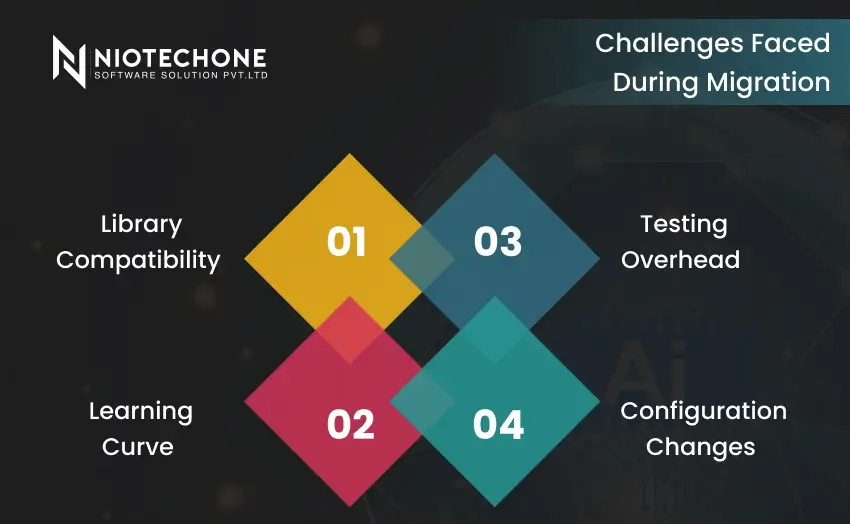
Challenges Faced During Migration

Library Compatibility  

Some of the third-party libraries used in MVC were not compatible with Core.

Solution: The team replaced them with new modern packages or developed their own to ensure compatibility.

Learning Curve  

ASP.NET Core introduced new concepts like middleware, dependency injection, and configuration in appsettings.json.

Solution: Internal training and workshops were conducted for developers.

Testing Overhead  

The migration involved significant regression testing to maintain feature functionality.

Solution: Continuous integration with xUnit and NUnit testing frameworks, automated testing, and increased confidence.

Configuration Changes  

The move from web.config to appsettings.json meant environment-specific configurations.

Solution: Azure Key Vault was used to securely manage sensitive configurations.

Best Practices for Migration

Start Small  

Start with non-critical modules. This reduces risk and builds trust in the process.

Use Feature Flags  

Roll out new features using feature flags. This enables rollback in case of problems, providing stability.

Maintain Parallel Systems  

Retain the MVC version until the Core version is stable. This ensures business continuity during migration.

Document Everything  

Maintain Document architectural changes, library upgrades, and configuration changes. This helps in understanding migration choices.

Leverage Cloud Services  

Deploy to Azure App Service, Azure AD, and Kubernetes. These enhance scalability, monitoring, and security.

Train Developers  

Provide training and workshops. This helps avoid mistakes and speeds up the learning curve.

Conclusion

Migrating from ASP.NET MVC to ASP.NET Core provides better performance, scalability, security, and cost. The FinTech, Healthcare IT, and E-Commerce case studies show that with proper planning and best practices, the transition can be smooth and advantageous. Partnering with a trusted ASP.NET development company or .NET application development company ensures expert guidance, and businesses can hire .NET developers to accelerate modernization.

Frequently Asked Questions FAQs

ASP.NET Core is cross-platform, faster, and cloud-ready, while MVC is Windows-only and considered legacy.

Small applications may take a few weeks, while large enterprise systems can take several months, depending on complexity.

Yes, Most databases supported in MVC are also supported in Core through Entity Framework Core.

Not necessarily. Business logic and models can often be reused, but controllers and views usually need adjustments.

Absolutely, ASP.NET Core is designed for microservices and containerized deployments, making it ideal for modern architectures.