SQL Server Management Studio (SSMS) Setup and Basic SQL Queries Tutorial

Introduction:

SQL Server Management Studio (SSMS) is a free tool from Microsoft that is primarily used to configure, manage, and administer Microsoft SQL Server. It provides a graphical interface to run SQL commands, create databases, tables, and stored procedures.

System Requirements

Requirement

Specification

Operating System

Windows 10 / 11 (64-bit)

Processor

1.8 GHz or faster

RAM

4 GB minimum (8 GB recommended)

Disk Space

At least 2 GB of free space

Internet Connection

Required for downloading setup files

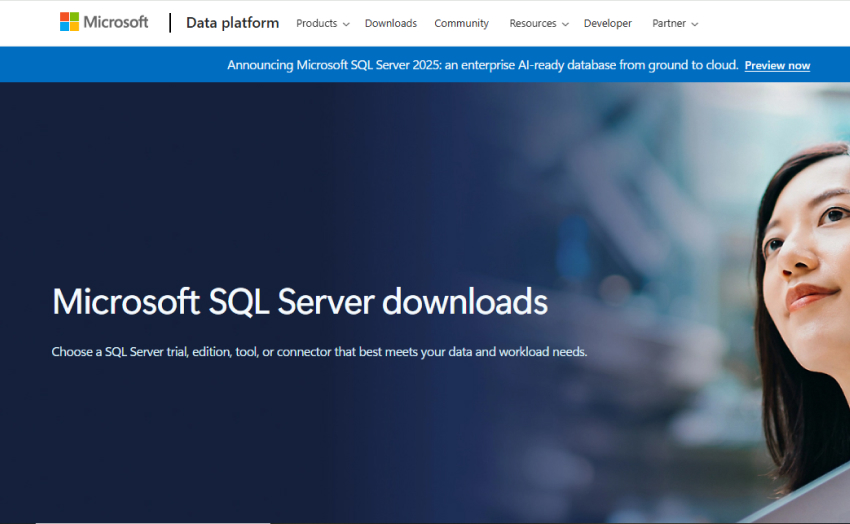
Download SQL Server and SSMS

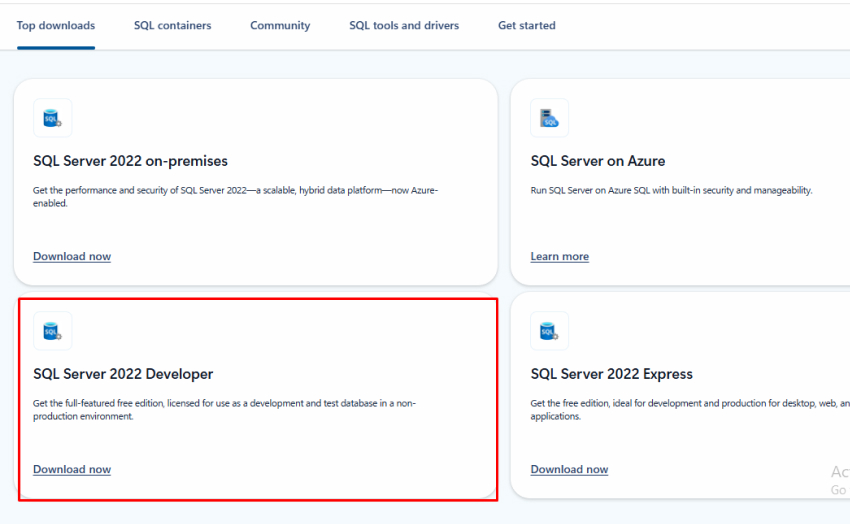
2. In the Top Downloads section, select SQL Server 2022 Developer.

3. This downloads the SQL Server installer (SQL2022-SSEI-Dev.exe).

Step 2: Install SQL Server
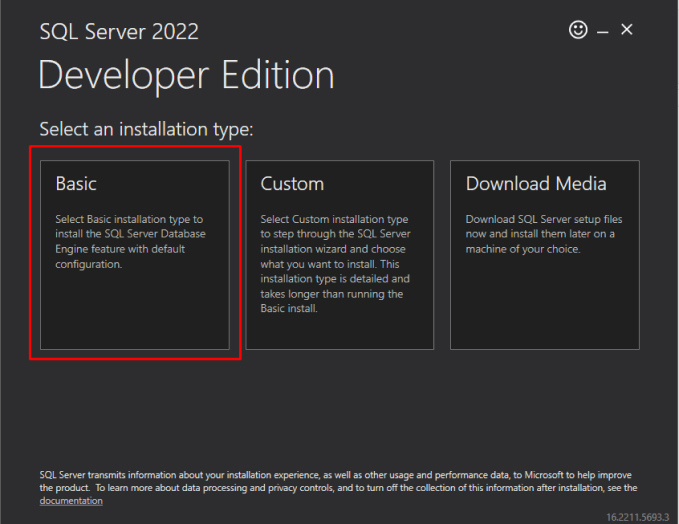
1. Run the installer and choose ‘Basic’ installation.

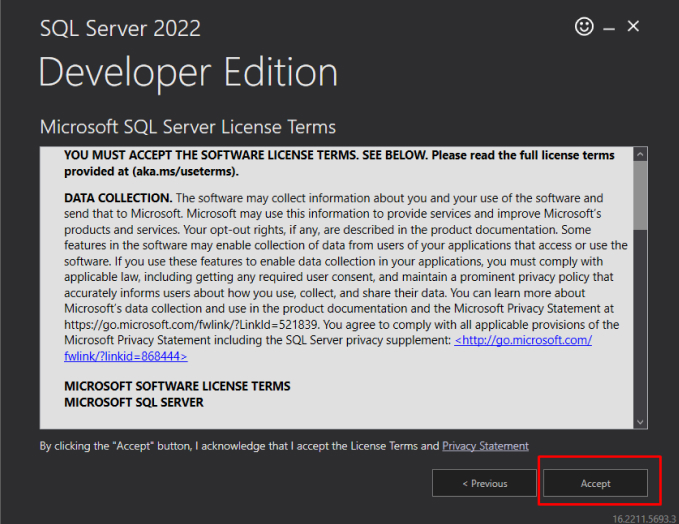
2. Accept the license terms and wait for completion.

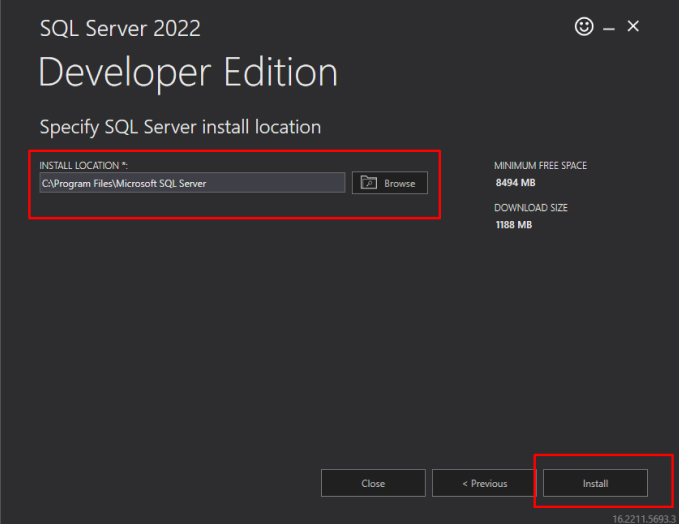
3. Specify the Path and click on install (default is fine)

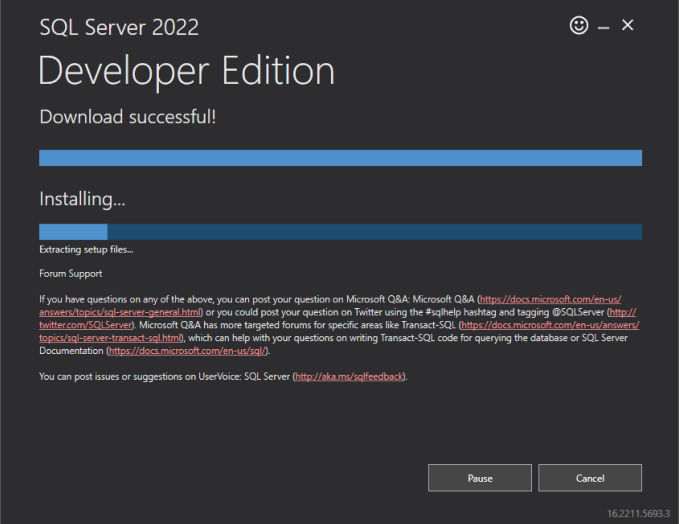
4. Wait for the download and installation process to finish.

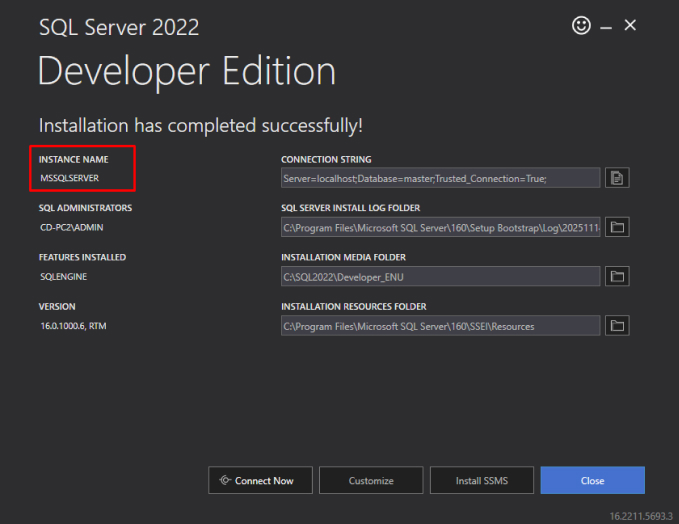
5. Note the Instance Name (e.g., MSSQLSERVER or SQLEXPRESS)

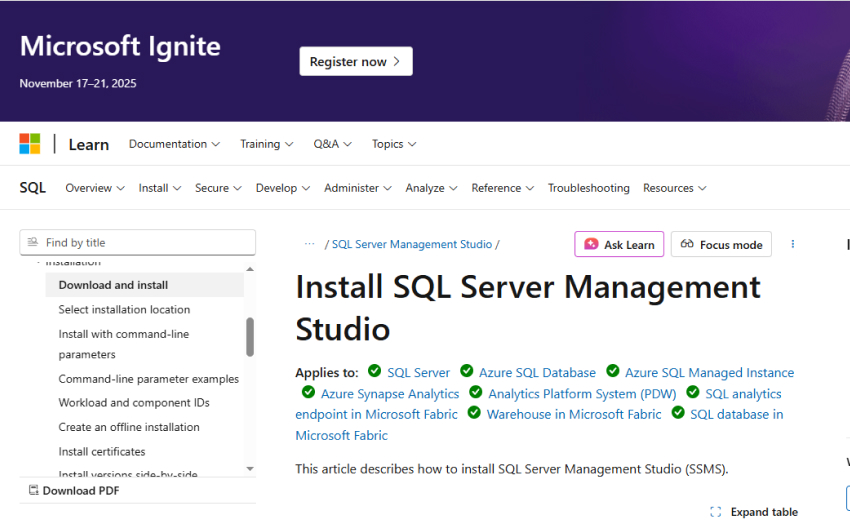
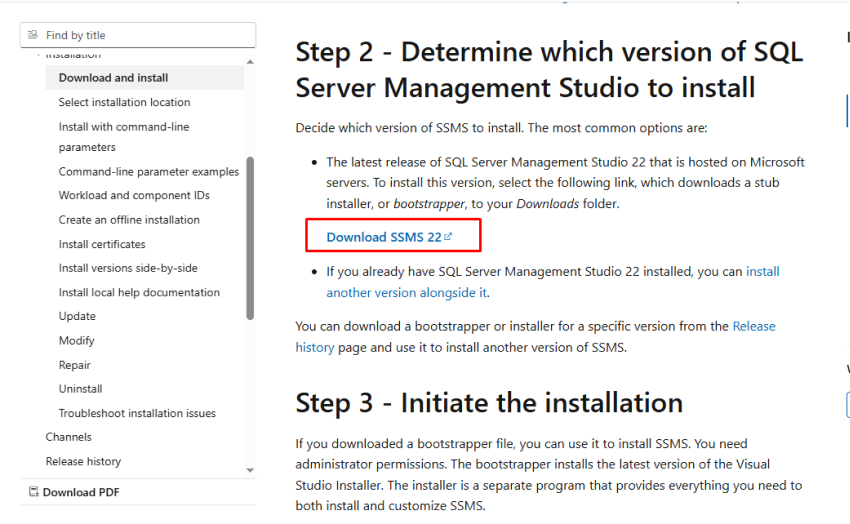
2. Click ‘Download SQL Server Management Studio (SSMS)’.

3. The setup file will be named SSMS-Setup-ENU.exe (~700 MB).

Step 4: Install SSMS

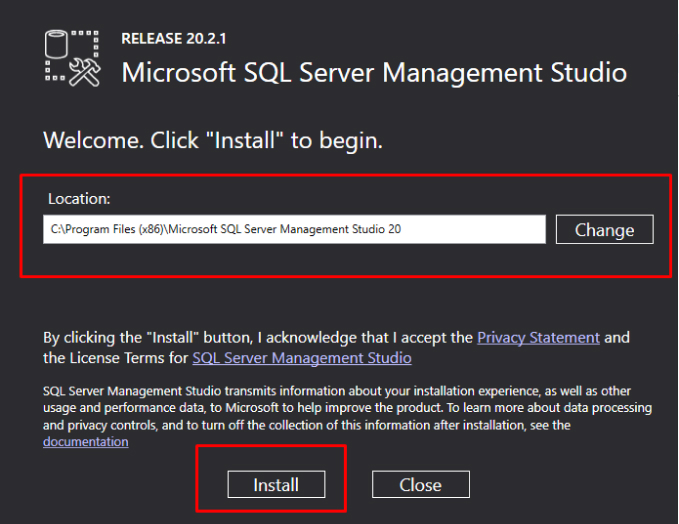
1. Run SSMS-Setup-ENU.exe.
2. Choose the installation path and click Install.

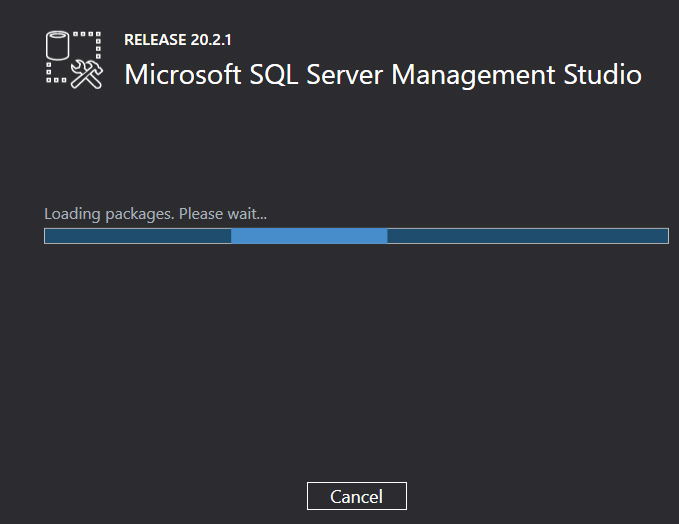
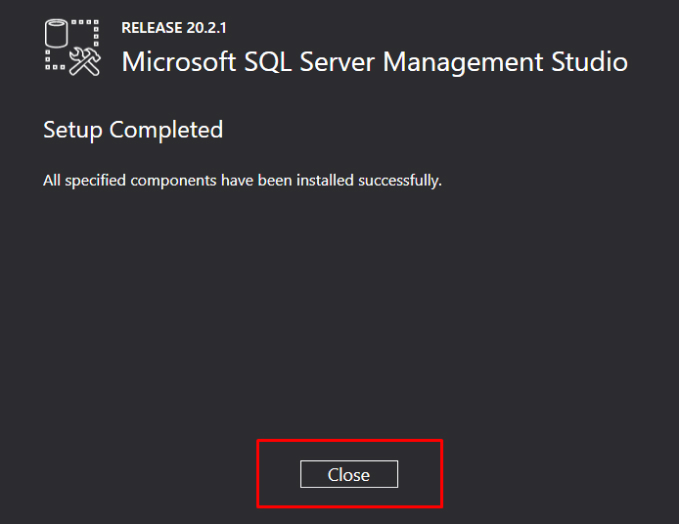
3. Wait for the installation process to complete.

4. After completion, click Close

Connect to SQL Server

1. Launch SSMS. The ‘Connect to Server’ window appears.
2. Enter the following details:

Field

Value

Server type

Database Engine

Server name

(local) or your instance name (e.g., .\SQLEXPRESS)

Authentication

Windows Authentication

Username/Password

Leave blank for Windows Authentication

Create a New Database

CREATE DATABASE StudentDB;
GO

Create a Table

USE StudentDB;
GO

CREATE TABLE Students (
StudentID INT IDENTITY(1,1) PRIMARY KEY,
FirstName NVARCHAR(50),
LastName NVARCHAR(50),
Age INT,
Course NVARCHAR(50)
);
GO

Insert Sample Data

INSERT INTO Students (FirstName, LastName, Age, Course)
VALUES
(‘Amit’, ‘Sharma’, 21, ‘Computer Science’),
(‘Neha’, ‘Patel’, 22, ‘Information Technology’),
(‘Ravi’, ‘Kumar’, 20, ‘Electronics’);
GO

Retrieve Data

SELECT * FROM Students;
GO

Update a Record

UPDATE Students
SET Course = ‘Data Science’
WHERE StudentID = 2;
GO

Delete a Record

DELETE FROM Students
WHERE StudentID = 3;
GO

Drop Table or Database

DROP TABLE Students;
GO

DROP DATABASE StudentDB;
GO

Useful Shortcuts in SSMS

Action

Shortcut

Run query

F5 or Ctrl + E

Comment selected code

Ctrl + K, Ctrl + C

Uncomment code

Ctrl + K, Ctrl + U

Format SQL code

Ctrl + K, Ctrl + D

New Query window

Ctrl + N

Execute line by line

F10

Troubleshooting Connection Issues

Issue

Possible Fix

Cannot connect to server

Ensure SQL Server service is running (check Services.msc)

Login failed

Use Windows Authentication instead of SQL Authentication

Timeout errors

Check firewall and ensure port 1433 is open

SSMS crashes or hangs

Repair installation via Apps → SSMS → Modify/Repair

Finalization

You have successfully installed SQL Server Management Studio (SSMS), and you have executed some basic SQL commands. You can create a database and manage it to write queries along with stored procedures, views, and triggers.

Frequently Asked Questions FAQs

SQL Server Management Studio (SSMS) is the official database management tool provided by Microsoft for SQL Server. It features a graphical user interface (GUI) and query editor to work with databases, tables, and SQL queries more effectively than just using T-SQL commands.

  1. Go to the official download page for Microsoft SSMS 
  2. Click Download SQL Server Management Studio (SSMS)
  3. Open the file you downloaded from the previous step.
  4. Follow the setup instructions in the installation wizard, which will assist you in installing SQL Server Management Studio (SSMS).
  5. After installation, you can correctly open SSMS and connect to a local or remote SQL Server instance.
  • SQL Server is a database engine that is responsible for storing and processing your data.
  • SSMS is the management interface that you will connect to SQL Server to run your queries and manage your databases.

In short, SQL Server does the heavy lifting, and SSMS gives you an interface to control it visually.

No - SSMS connects to a SQL Server instance (local or remote). If you do need to install SQL Server production use you'll need to have an instance of SQL Server installed locally or remote. You can install SQL Server Express, which is free to use, for local use and then connect to SQL Server Express through SSMS.