GraphQL vs REST APIs in ASP.NET Core 2026

Introduction

In ASP.NET Core 2026, developers have a dilemma of using REST APIs or GraphQL. REST has long been the foundation of web APIs, and GraphQL is becoming popular due to its flexibility and efficiency. This blog contrasts the two methods, their advantages, and demonstrates when to apply each one of them, whether you’re a .NET development company, an ASP.NET Core development company, or planning to hire .NET developers.

What is a REST API?

REST (Representational State Transfer) is a popular architectural pattern for developing APIs based on standard HTTP methods to communicate with resources. In REST, each resource is represented by a unique URL, and clients are able to use operations such as GET, POST, PUT, PATCH, and DELETE to handle data.

This method is common as it is simple to comprehend, predictable, and is extensively cross-platform. For example, a request to /users/1 could provide all the information about a particular user. REST APIs can also be easily used with web browsers and have the advantage of built-in HTTP capabilities like caching, which makes them efficient in large-scale applications.

Benefits of REST

  • Easy and predictable endpoints
  • Easy caching with HTTP standards
  • Mature ecosystem and tooling
  • Perfect for CRUD operations

What is GraphQL?

GraphQL is a new API query language that enables clients to query an endpoint to get only the data they require. GraphQL allows developers to bundle queries into a single request and get a structured response, unlike REST, which can frequently need several calls to retrieve related resources.

It is particularly applicable in applications where various clients require various slices of data. As an example, a mobile app might just require the name and email of the user, whereas a dashboard might need the entire profile with posts and comments.

GraphQL addresses this by allowing clients to define their specific needs, minimizing over- and under-fetching. Its highly typed schema is consistent and reliable, and it is a potent tool for complex, data-driven applications.

Benefits of GraphQL

  • Eliminates over‑fetching and under‑fetching
  • Consistency is guaranteed by a strongly typed schema
  • Ideal for complex, data‑rich applications
  • Scalable to various customers (web, mobile, IoT)
GraphQL vs REST API comparison illustration showing differences between GraphQL and REST architectures for modern application development

REST vs GraphQL: Key Differences

Feature

REST

GraphQL

Endpoints

Multiple

Single

Data Fetching

Predefined

Client‑specific

Caching

Easy with HTTP

More complex

Performance

May require multiple calls

Often fewer calls

Learning Curve

Easier

Steeper

REST in ASP.NET Core 2026

ASP.NET Core 2026 makes REST APIs simple with minimal APIs.

đź”·
app.MapGet("/products/{id}", async (int id, AppDbContext db) =>
{
    return await db.Products.FindAsync(id);
});

For an ASP.NET development company, REST remains the default choice for building scalable and cacheable APIs.

GraphQL in ASP.NET Core 2026

ASP.NET Core is compatible with GraphQL libraries such as HotChocolate.

đź”·
query {
  product(id: 1) {
    id
    name
    price
  }
}

GraphQL is gaining popularity among .NET Core development companies that require flexibility and efficiency in dealing with complex queries.

Real‑World Applications

REST in Action

1. Banking & Finance

Banks and other financial institutions use REST APIs to have predictable, secure, and cacheable endpoints. For example, /accounts/{id}/balance will immediately give the account balance of a customer. Third-party applications and payment gateways can easily integrate with REST due to its simplicity.

2. Government Services

REST APIs to services such as tax filing, license renewals, or access to public records are exposed through government portals. REST also guarantees standardized endpoints, which simplify the task of developers to consume data and develop citizen-facing applications.

3. E‑Commerce

Product listing, shopping carts, and order management are done using REST APIs in online stores. REST is well-suited since these operations are resource-centric. As an example, /products/{id} will provide product information, and /orders/{id} will be used to track orders.

GraphQL in Action

1. Social Media Platforms

GraphQL is ideal when the social media application requires a variety of data in a single request. One query is able to retrieve posts, comments, likes, and user profiles, which saves numerous network calls.

2. Healthcare IT

Healthcare platforms tend to have various clients — mobile apps, dashboards, and analytics tools. GraphQL enables every client to request patient data, appointments, and reports in their own formats, making it efficient and accurate.

3. Education Portals

Assignments, grades, and schedules can be queried by students, teachers, and administrators at a single endpoint. Each role gets tailored data without over‑fetching or under‑fetching, improving performance and usability.

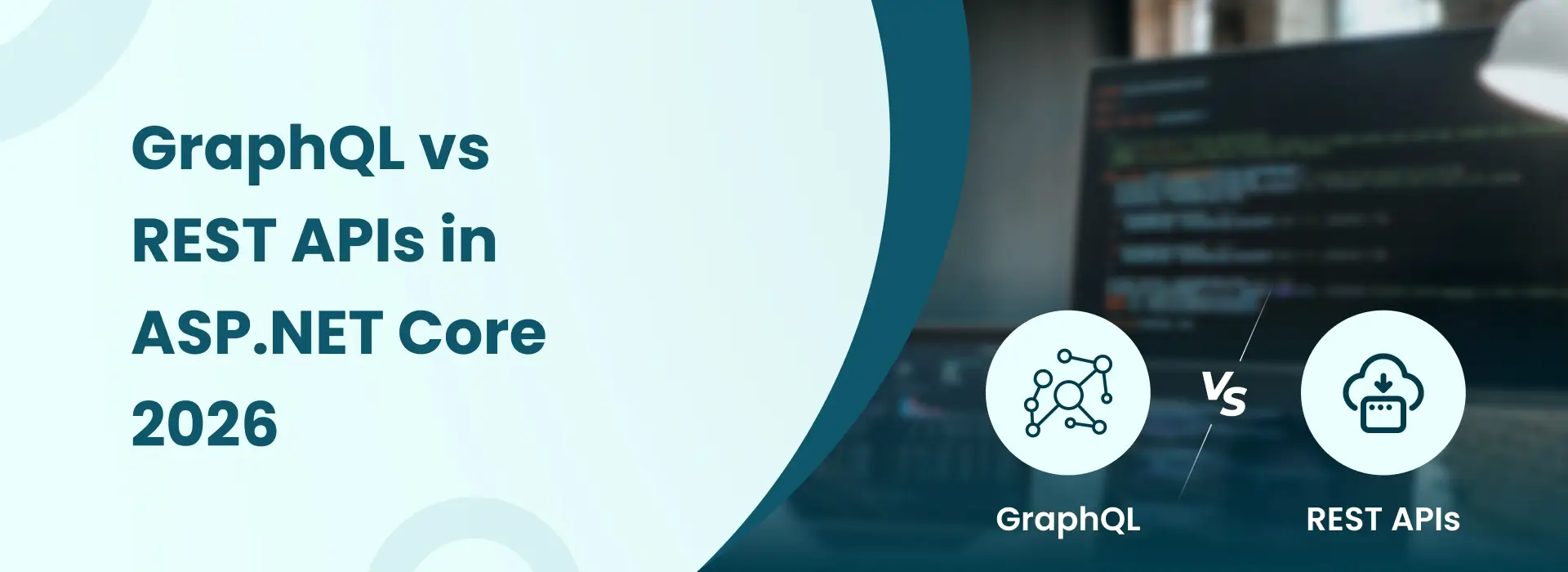
Comparison of GraphQL and REST API challenges including caching complexity and over-fetching issues

Challenges in REST & GraphQL

REST Challenges

1. Over‑Fetching

Clients can be provided with excessive data. As an example, retrieving all product information when only the name is needed.

2. Multiple Calls

Clients may require multiple requests to retrieve related resources, e.g., user info, then orders, then order items.

GraphQL Challenges

1. Caching Complexity

GraphQL does not use HTTP caching, as opposed to REST. Custom caching strategies need to be adopted by developers.

2. Learning Curve

GraphQL involves learning about schemas, resolvers, and query language, which may be more difficult to learn as a beginner.

3. Performance Risks

Badly constructed queries may demand excessive data, which slows down servers.

Best Practices For REST & GraphQL

For REST

Keep Endpoints Resource‑Centric and Predictable  

  • Design endpoints around resources. As an illustration, /users/{id} should never fail to provide user information. APIs are easier to integrate and maintain due to predictable endpoints.


Use HTTP Caching to Improve Performance
  

  • Leverage headers like ETag and Cache-Control to reduce server load and speed up responses. This is particularly handy when it comes to resources that are frequently visited, like product catalogs.


Document APIs Clearly for External Developers
  

  • Give good examples, endpoint descriptions, and error codes. Proper documentation will guarantee easy integration and less overhead on support.


For GraphQL

Design Schemas Carefully to Avoid Performance Bottlenecks  

  • The structure of queries and responses is defined by schemas. Inefficiency may be caused by poorly designed schemas. Always be scalable.


Implement Query Limits and Depth Restrictions to Prevent Abuse
  

  • GraphQL supports nested queries. Without restrictions, servers can be overloaded. Stability is guaranteed by setting query depth limits and maximum complexity.


Use Persisted Queries for Caching and Security
  

  • Continued queries enhance the efficiency of caching and minimize the chances of malicious queries. They also ensure that APIs are more secure by restricting the requests of the clients.

Conclusion

In ASP.NET Core 2026, REST is the most popular and simple to use, and caching is best done, while GraphQL is the most complex and data-driven application. A combination of the two is usually the most intelligent strategy, as it capitalizes on the advantages of each. Whether you’re a .NET development company, an ASP.NET Core development company, or planning to hire .NET developers, choosing the right API strategy will determine the success of your project.

Frequently Asked Questions FAQs

No. REST is still widely used and remains the backbone of many APIs. GraphQL is an alternative approach, not a replacement. Both coexist depending on project requirements.

GraphQL can reduce network calls by fetching only the required data, while REST benefits from built‑in HTTP caching. The faster option depends on the use case and API design.

Yes, ASP.NET Core 2026 supports hybrid APIs, allowing developers to combine REST for simple, cacheable resources and GraphQL for complex, client‑specific queries.

GraphQL is often better for mobile apps because it minimizes data transfer and reduces the number of API calls, improving performance and user experience.

Yes, GraphQL has a steeper learning curve due to schemas and query language, but it offers more flexibility and efficiency once mastered.