
Fast Development vs Sustainable Development: Key Differences
- Niotechone Marketing Team
Table of Contents
- Introduction
- What Is Fast Development?
- What Is Sustainable Development?
- Fast Development vs Sustainable Development: A Clear Comparison
- The Hidden Cost of Moving Too Fast
- Sustainable Development in Modern .NET Projects
- Real-World Use Case: Startup vs Enterprise Scenario
- Trends Influencing Development Strategy
- The importance of Engineering Maturity
- Conclusion
Introduction
Speed is a competitive advantage in 2026. Startups aim for quick MVP releases. Businesses desire quicker rollouts of features. All CTOs desire shorter release cycles. However, the most important question is this: Is fast development equal to sustainable development?
The answer is no.
Many organizations engage a .NET development company expecting quick delivery. Speed matters, but not at the expense of sustainability. Speed brings instability, technical debt, and increased maintenance costs. Whether you are dealing with a custom software development company or you are planning to develop an enterprise .NET application, it is important to know the difference between fast and sustainable development to achieve long-term success.
What Is Fast Development?
Fast development is concerned with the rapid delivery of features with a minimum delay. It is often driven by:
- Market pressure
- Investor expectations
- Competitive launches
- Tight deadlines
- MVP validation goals
Rapid growth is not necessarily bad. Actually, it may be required in case of startups that are developing prototypes. An experienced ASP.NET Core development company can assist in speeding up early releases effectively.
However, the problem begins when speed becomes the only priority.
Characteristics of Fast Development
- Short-term feature focus
- Inadequate architectural planning
- Minimal documentation
- Reduced testing cycles
- Band-Aid solutions rather than solutions
Fast development is effective in the initial few months in most instances. The issues appear later.
What Is Sustainable Development?
Sustainable development strikes a balance between speed and structure. It is concerned with long-term stability, scalability, and maintainability.
Sustainable development to any serious software development company in Rajkot or any other part of the world implies the construction of systems that:
- Scale easily
- Adapt to change
- Minimize rework
- Reduce technical debt
- Have regular release schedules.
Sustainability in the development of .NET applications includes considerate ASP.NET Core application architecture, automated testing, CI/CD pipelines, and cloud-ready infrastructure.
It is not about slowing down. It is about building intelligence.
Fast Development vs Sustainable Development: A Clear Comparison
Criteria | Fast Development | Sustainable Development |
Focus | Speed of delivery | Long-term stability |
Architecture | Often minimal | Well-planned and evolving |
Testing | Basic or rushed | Automated and structured |
Documentation | Limited | Clear and maintained |
Cloud Strategy | Reactive | Designed with Azure cloud architecture |
Maintenance Cost | Increases over time | Controlled and predictable |
Scalability | Risky | Designed for scalable software application growth |
In 2026, organizations that prioritize sustainable engineering consistently outperform those chasing short-term speed.
The Hidden Cost of Moving Too Fast
Numerous decision-makers are concerned with the cost of development. However, they do not consider the cost of maintenance.
Fast development can lead to:
- Rewriting modules in 12-18 months.
- Performance bottlenecks
- Security vulnerabilities
- Hard to onboard new developers.
- Reduced system scalability
When companies outsource .NET developers or collaborate with a custom software developer, they have to consider engineering maturity, not only speed.
Speed without structure creates invisible risk
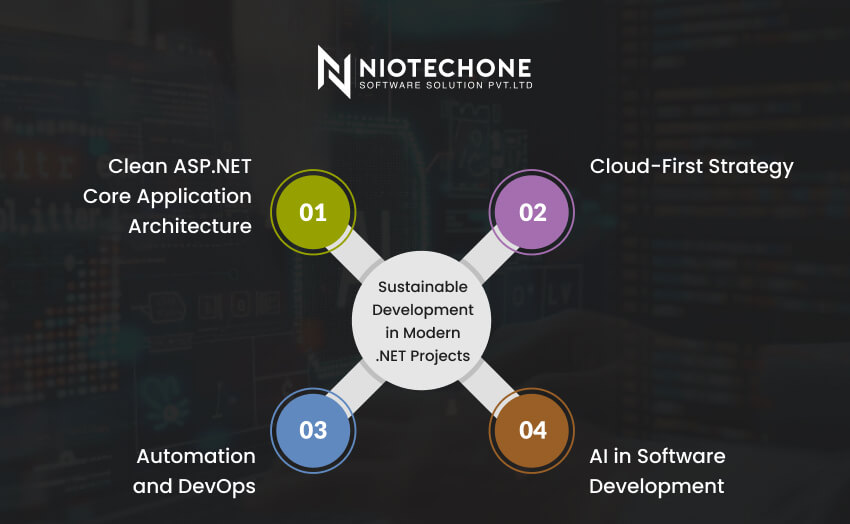
Sustainable Development in Modern .NET Projects
The 2026 sustainable development entails the integration of robust architecture and contemporary tooling.
1. Clean ASP.NET Core Application Architecture
Structured architecture guarantees:
- Distinct separation of concerns.
- Maintainable codebase
- Modular expansion
- API clarity
Rajkot teams of professional ASP.NET developers pay much attention to architectural governance at the very beginning.
2. Cloud-First Strategy
The cloud is designed to support modern applications. Sustainable development encompasses:
- This required the use of microservices.
- Planning of Azure cloud architecture.
- Containerization strategies
- Auto-scaling design
The development of cloud applications is not deployment, but it is architectural thinking.
3. Automation and DevOps
Sustainable development depends on:
- CI/CD pipelines
- Infrastructure as Code
- Automated regression testing.
- Continuous monitoring
An experienced ASP.NET development company incorporates DevOps at the initial stage, avoiding deployment anarchy in the future.
4. AI in Software Development
The role of AI in software development in 2026 is important in sustainability:
- Automated test generation
- Smart code review recommendations.
- Anticipatory performance management.
- Risk detection
Real-World Use Case: Startup vs Enterprise Scenario
Startup Scenario
A startup collaborated with a software development company in Rajkot to develop an SaaS MVP within a short time.
They prioritized:
- Core feature release
- Basic API structure
- Limited testing
Outcome: Rapid deployment in 3 months.
However, once it had 5,000 users, performance problems were noticed. It needed refactoring, which was more expensive than the initial construction.
Enterprise Scenario
One of the enterprises collaborated with Niotechone Software Solution Pvt. Ltd., which specializes in the sustainable development of .NET applications.
They invested in:
- Clean ASP.NET Core application architecture.
- Azure cloud architecture
- API versioning
- Structured documentation
- Automated deployment
Outcome: A little more time to build the first one, but it can scale to many markets without significant refactoring.
Sustainable development was time-saving in the long term.
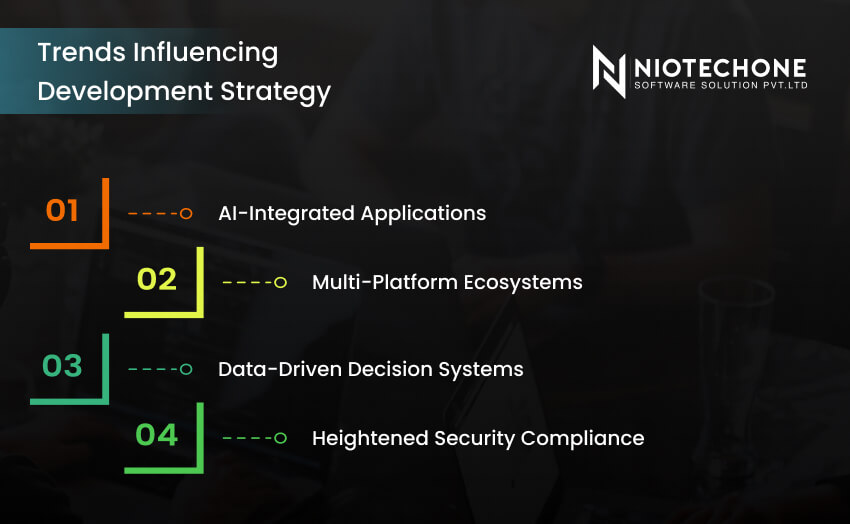
Trends Influencing Development Strategy
Sustainable development is necessary in 2026 due to several trends:
- AI-Integrated Applications
AI modules require a well-organized architecture and scalable infrastructure.
- Multi-Platform Ecosystems
Applications are interconnected on mobile, web, APIs, and cloud services.
- Data-Driven Decision Systems
Real-time analytics demand streamlined backend systems.
- Heightened Security Compliance
Cloud-native systems are required to comply with more stringent security and privacy standards.
Sustainable development provides flexibility in this changing environment
The importance of Engineering Maturity
A trusted .NET development company in Rajkot specializes in:
- Long-term scalability
- Safe Azure cloud architecture
- Clean ASP.NET Core APIs
- Automated workflows
- Performance optimization
Niotechone Software Solution Pvt. Ltd. adheres to this balanced strategy- providing effective solutions without affecting sustainability.
Conclusion
Rapid growth is productive. Sustainable development provides long-term value.
By 2026, companies will not be able to afford unreliable systems that are only created to be launched quickly. The distinction between success and stagnation in the development of enterprise .NET application development solutions or your next SaaS platform is an engineering discipline.
By engaging an established ASP.NET development company or a reliable .NET development company in Rajkot, you are not only getting your product developed to meet the current deadline, but also to meet the future requirements.
Categories
Related Articles


Frequently Asked Questions FAQs
No. It works well with MVPs and initial validation. When an engineering discipline is substituted for speed, problems occur.
It reduces rework, avoids system failures and is scalable without significant restructuring.
Good ASP.NET Core application architecture guarantees maintainability, performance optimization, and easy scaling.
It allows auto-scaling, secure deployments, and structured infrastructure management.
Yes, AI enhances testing efficiency, performance monitoring, and code quality- but should be used in addition to a robust engineering culture.