

Search Visibility in 2026: What Algorithms Now Reward
- Niotechone Marketing Team
Table of Contents
- Introduction
- What You Need to Know About Search Algorithms in 2026
- What Do Search Engines Value in 2026?
- How AI is Changing Search Ranking Factors
- Strategies for increasing your Visibility in Search in 2026
- Content Depth and Topical Authority Matter More Than Ever
- User Experience Is a Core Ranking Signal
- Increased Importance of Brand Trust and E-E-A-T Signals
- Conclusion
Introduction
The way businesses optimize their search engine visibility has changed significantly and will look different by the year 2026 than what the way businesses optimized their visibility a few years ago. Rankings no longer rely on frequency of keywords, backlinks only, or optimizations at the surface level. Instead, search engines now use the following criteria for evaluating web pages: understanding, intent, trust, and experience. These are primarily powered by Artificial Intelligence.
This blog will examine the top search visibility strategies for 2026, the artificial intelligence (AI) driven search ranking factors that will be determining what results appear at the top of the Google results pages, and how businesses will need to adapt their SEO practices in 2026, in order to stay relevant. If you are still relying on your outdated SEO playbook, you will want to look into how you can adapt your strategy.
What You Need to Know About Search Algorithms in 2026
By the year 2026, search engines will no longer be simple indexing tools. Instead, they will act more like intelligent evaluators of web content as people do a large number of scales. In understanding how to properly utilize search algorithms in 2026, it is imperative to realise that the majority of algorithms will be AI-driven.
Search Engines Will No Longer Simply Ask the Question “Does This Page Match the Keyword?” Instead, Search Engines Will Consider:
- Is the Content Helpful?
- Does the Source Provide Helpful Information and Experience?
- Does the Content Show Depth and Originality?
- How Does a User Interact With this Page After Clicking?
AI Models Will Continue to Evaluate Context, Semantics, User Behavior and Content Quality Together and Not Independently from One Another.
What Do Search Engines Value in 2026?
The Primary Reality of SEO in 2026 is That Search Engines Value Content That Is Valuable Over Content That Is Created Using Optimization Techniques.
The Search Engine Algorithms of the Future Are Going to Continue to Provide Value to Content That:
- Provides Clear and Comprehensive Solutions to Real-World Problems
- Demonstrates Credibility and Expertise
- Uses Authentic, Human-Centered, Informational Language
- Provides Depth Rather Than Very Brief/Surface-Level Summaries.
Thin Content, Over-Optimized Pages, and AI-Generated Text Without Human Review Will All Have Difficulty Ranking with Search Engines.
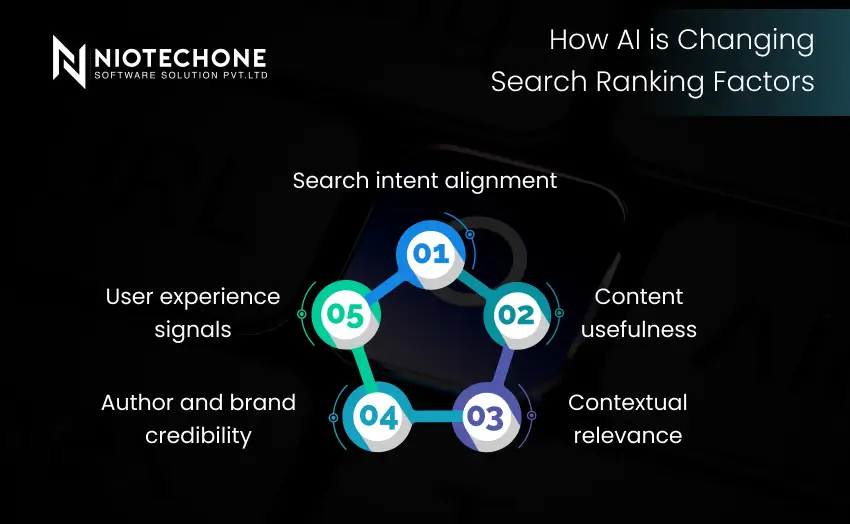
How AI is Changing Search Ranking Factors
Instead of counting up the signals that help to determine ranking positions, the AI-driven ranking factors now take a more holistic approach to understanding the meaning of content.
Here are some factors that will influence your ranking in 2026:
- Search intent alignment: How closely your content aligns with what the user actually wants.
- Content usefulness: Determined by how engaging users find it, how long they spend on it, and their interactions with it.
- Contextual relevance: How much you understand about related topics (not just the exact matched terms).
- Author and brand credibility: Demonstrated expertise and consistency.
- User experience signals: How quickly your content loads, how easy it is to read, and how well it performs on mobile devices.
When evaluating content, AI considers all the ranking signals combined, so having many weak signals cannot be compensated for by one strong signal.
Strategies for increasing your Visibility in Search in 2026
As a best practice for increasing your visibility in search in 2026, businesses should focus on building long-term authority rather than creating tactics to get quick ranking boosts. Businesses need to move from thinking about “SEO tactics” to thinking about “search strategy.”
Some examples of good search visibility strategies for increasing your visibility in search in 2026:
- Develop clusters of in-depth content that are focused on one topic.
- Begin creating content for people first and search engine algorithms second.
- Update your existing content on a regular basis.
- Create content that aligns with the actual customer journey.
Search engines will ultimately reward brands that create helpful, trustworthy content consistently across related topics, rather than brands that create a one-off page based solely on keywords.
Content Depth and Topical Authority Matter More Than Ever
Topical authority and content depth will be more relevant to your rankings in 2026. Search Engines look harder at how much depth, accuracy, and clarity you’ve applied consistently across your site in relation to a given topic than they do at any single page of a website.
You build strong topical authority when you
- Have at least three pieces of content that talk about the same subject, but from different angles.
- Internal links connect related pieces of content in a logical way.
- Keep information up-to-date and relevant.
- Anticipate and proactively respond to follow-up questions from your users about your content.
So by applying the above method, you achieve two of the most important aspects of Modern SEO – visibility (being found) and trust.
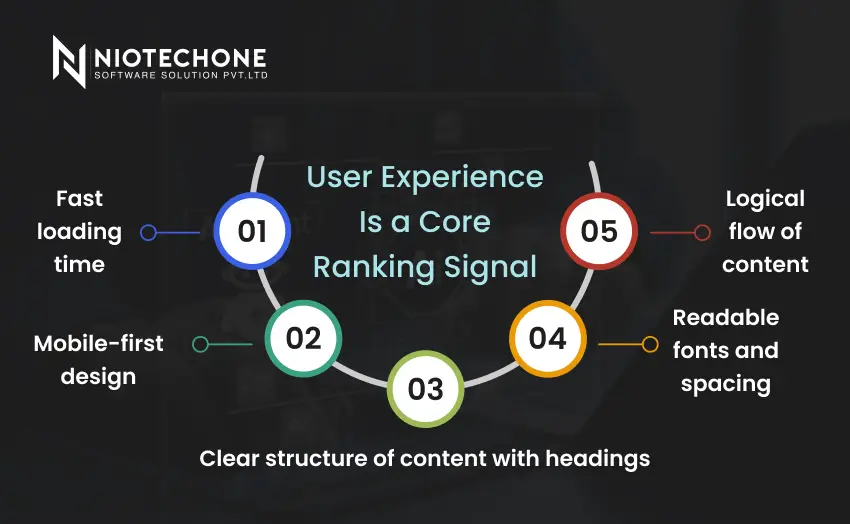
User Experience Is a Core Ranking Signal
Increasingly, search engines look at how a user experiences your content after they have clicked to go to your page.
Important elements of the user experience include:
- Fast loading time.
- Mobile-first design.
- Clear structure of content with headings.
- Readable fonts and spacing.
- Logical flow of content.
In 2026, SEO and user experience design cannot be separated. Learn more about our Web Design and UX Services optimized to increase performance and engagement with your customers.
Increased Importance of Brand Trust and E-E-A-T Signals
Experience, Expertise, Authoritativeness, and Trustworthiness (E-E-A-T) are becoming more important than ever before with search engines. In fact, search engines can determine not only what content is on your website but also who created that content.
Some examples of Trust Signals include:
- Consistency of Brand Presence
- Clarity in Author Information
- Transparency in Business Information
- Security of Websites and Policies
Companies that establish their credibility will consistently outperform their competition, which merely focus on getting quick wins.
Conclusion
The future of Search Visibility in 2026 accompanies what has always been true: the better Search Engines get at rewarding what Users truly value. Understanding how search engine algorithms work in 2026 will require you to stop taking “shortcuts” in how to build your Online Brand Visibility.
If you focus on Artificial Intelligence-driven search ranking factors, use experience as your priority and transform your business practices in 2026 to adapt to SEO changes, which will give the greatest opportunity to achieve long-term visibility. Those that don’t will continue to lose visibility, no matter how much effort you put into optimizing your pages to appear great.
Categories
Related Tags
Frequently Asked Questions FAQs
Search algorithms do not rely solely on keywords or links anymore; instead, they analyze a user's intent, contextual information about the contents of the page, and how users interact with a website using Artificial Intelligence technology.
Search engines reward helpful, unique, trustworthy content that provides a positive user experience and closely matches the user's intent, as opposed to simply matching a user's keywords.
Yes, however, keywords should be used naturally rather than being forced into the content. Context, relevance, and depth of the content will be more valuable than simply having an exact match of the keyword.
Yes, provided that AI-generated content has been enhanced with human expertise, originality, and value; however, stand-alone raw AI content is unlikely to rank well.
Developing a content strategy that emphasizes topical authority, quality of content, user interface design, and long-term trust will produce the most effective results.


